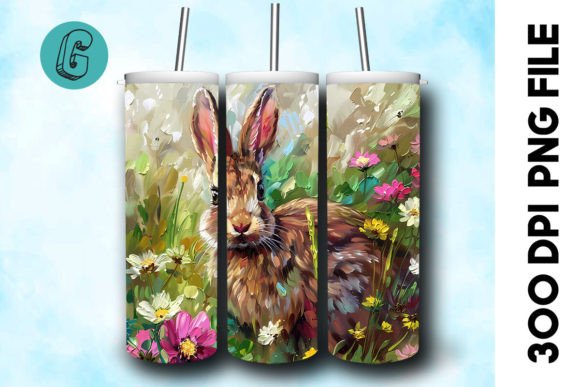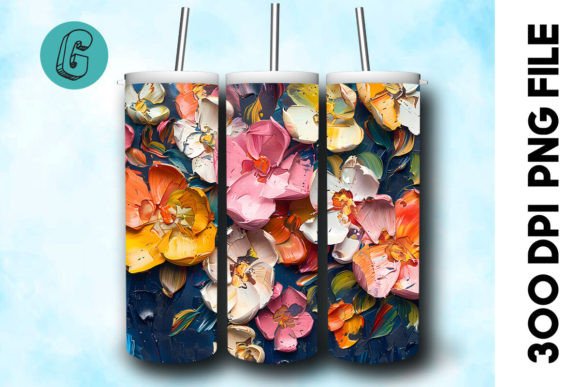
Oil Paint Pretty Flowers Tumbler Wrap 34
A Designer’s First Glance: Soft, Lush, and Unapologetically Feminine
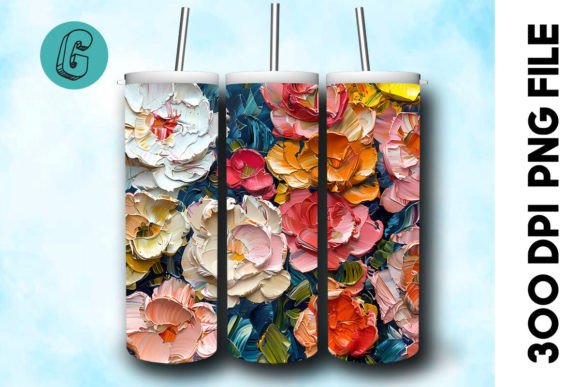
When Oil Paint Pretty Flowers Tumbler Wrap 34 opened on my screen, I didn’t see a “tumbler wrap”—I saw a mood. Loose brushstrokes, layered petal shapes, and gentle color transitions give it that hand-painted watercolor-meets-oil texture—warm but not cloying, detailed but never fussy. It’s not a tight botanical illustration; it’s a celebration of abundance, softness, and quiet joy. That tells me immediately: this isn’t for minimalist monochrome apparel or sharp-edged tech gear. It belongs on things people hold close—tote bags for farmers’ market runs, baby onesies with tiny embroidered stems peeking from the shoulder, linen tea towels folded beside a farmhouse sink.
Where It Shines in Real Embroidery Projects
I tested Oil Paint Pretty Flowers Tumbler Wrap 34 as the centerpiece for a custom embroidered cotton-linen blend apron—think small-batch bakery branding meets handmade charm. The design wrapped beautifully around the curved waistband, its organic flow complementing the drape of the fabric. On sweatshirt embroidery? Yes—but only on mid-weight fleece or French terry with proper cutaway stabilizer underneath. The petals hold up well in satin stitch when scaled to 4–5 inches wide, and the subtle gradients translate surprisingly well into thread color layering (think peach → coral → rose → deep burgundy).
For Etsy sellers and craft fair vendors, this is a smart design asset: it works equally well as a machine embroidery design for pillow covers and as a printable mockup base for digital product previews. I used it as a background for a set of holiday embroidery kits—framed in rustic wood hoops, then photographed against burlap and dried lavender. Customers responded strongly to the warmth and tactility it implied, even before stitching began.
Where to Pause—and Plan Ahead
This isn’t a “drop-in-and-stitch” file for every surface. On stretchy knits like baby bodysuits or lightweight jersey tees, the floral curves can distort if hooping isn’t precise or if stabilizer isn’t layered thoughtfully (tear-away + light cutaway worked best). Tiny buds near the corners? They’re charming at 6 inches wide—but vanish entirely if shrunk below 3.5 inches in hoop size. If you’re planning an embroidered patch, keep the finished size above 4.5 inches to preserve petal definition and avoid dense fill stitch buildup.
Dark fabrics demand extra attention: the lighter flower centers rely on contrast, so test thread colors in both black and white mockups first. And while Oil Paint Pretty Flowers Tumbler Wrap 34 reads beautifully on smooth cotton or canvas, it fights back on heavily textured weaves—like raw linen or bouclé—where satin stitches snag or float unevenly. For caps or curved surfaces, consider simplifying outer elements or using it as a side-panel motif rather than full-wrap.
What This Design Says About Your Finished Product
When your customer unboxes a tote bag featuring Oil Paint Pretty Flowers Tumbler Wrap 34, they don’t just see flowers—they feel intention. The soft edges and painterly rhythm signal care, not automation. That lifts perceived value instantly. Handmade product buyers notice the difference between a crisp vector repeat and something that breathes like real pigment—and that builds trust. For boutique owners, it supports brand consistency without demanding rigid uniformity: pair it with neutral embroidery fonts or simple monograms, and it becomes quietly signature, not overwhelming.
As a holiday embroidery option, it leans gently into spring-into-summer gifting—think baby shower blankets, bridal party robes, or personalized kitchen towels for newlyweds. It avoids seasonal clichés (no holly, no snowflakes), which makes it evergreen across listings and inventory cycles. And yes—it photographs well flat *and* in lifestyle shots, a quiet win for Instagram-driven craft businesses.
Practical Notes Every Embroidery Designer Should Check
- Test on scrap fabric first—especially if pairing with textured or dark materials.
- Review stitch density before scaling: high-fill areas may need reduced density on lightweight fabrics.
- Confirm hoop size compatibility; this design benefits from at least a 5×7 hoop for optimal clarity.
- Inspect small details like stamen lines and leaf veins—if they disappear at your target size, simplify manually or adjust underlay.
- Use proper stabilizer: cutaway for knits, tear-away for stable wovens, and optional topping for fuzzy fabrics.
- Check licensing before selling finished items or bundling as part of a commercial embroidery kit—this is a digital embroidery file, and usage rights affect your craft business long-term.
- Compare light and dark fabric backgrounds in mockups—not just for contrast, but for how the “oil paint” illusion holds up.
Final Thought: A Background That Earns Its Place
Oil Paint Pretty Flowers Tumbler Wrap 34 doesn’t shout. It invites. As a Backgrounds category asset, it succeeds because it supports—not overshadows—the object it wraps. Whether you’re stitching a personalized gift for a friend or building a cohesive line of small shop products, this design gives you room to breathe, to layer meaning, and to let the handmade quality shine through. It’s not flashy. It’s thoughtful. And in today’s crowded maker space, that’s the kind of Graphics asset that earns repeat customers, not just one-time sales.