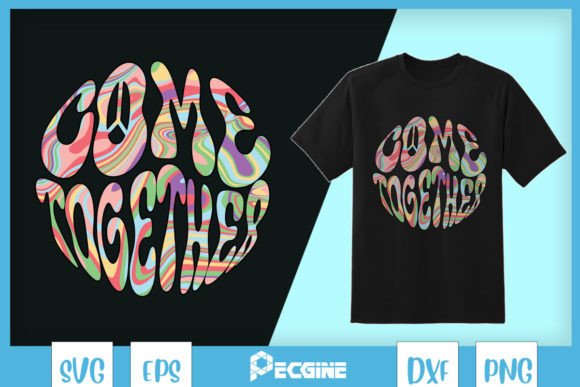
Kool Karma Tie Dye Unity SVG: Graphics for T-Shirt Designs
As a blog designer who’s built over 40 content-rich websites—and shipped hundreds of digital guides, newsletter banners, and affiliate marketing assets—I opened Kool Karma Tie Dye Unity SVG expecting playful energy. What I got was something sharper: a design that balances bohemian warmth with editorial polish. It’s not just “trendy tie-dye”—it’s a graphic design asset calibrated for real publishing workflows.
A First Impression That Builds Reader Trust
The moment you drop Kool Karma Tie Dye Unity SVG into a mockup, it lands with quiet confidence. Swirls are fluid but intentional; color transitions feel organic—not pixelated or over-saturated. There’s no visual noise, no competing gradients. That matters deeply when your readers scan a blog in under three seconds. This isn’t background filler—it’s an editorial design anchor. It signals approachability without sacrificing professionalism, making it ideal for lifestyle bloggers, online educators, wellness creators, and small business branding projects rooted in authenticity.
It leans artistic and modern—not corporate, not juvenile. Think yoga retreat newsletters, eco-conscious product roundups, creative entrepreneur workbooks, or mindful parenting digital guides. It supports niches where warmth, unity, and gentle self-expression are part of the brand voice.
Where This Graphic Design Asset Earns Its Place
I tested Kool Karma Tie Dye Unity SVG across six live publishing touchpoints—and it delivered consistently:
- Blog featured images: Scales beautifully as a hero graphic behind bold headline text—especially with sans-serif or display fonts.
- Pinterest pins: Stands out in crowded feeds thanks to its balanced contrast and clear focal flow—even at thumbnail size.
- Digital guides & lead magnets: Used as a subtle watermark or section divider in Canva templates—adds cohesion without overwhelming content.
- Newsletter headers: Works as a top banner behind short value-driven copy (“Your Free Creative Planning Kit” feels instantly more inviting).
- Category thumbnails: Gives visual identity to “Mindset,” “Wellness,” or “Creative Business” sections—improving category recognition at a glance.
- Social media graphics: Paired with minimal typography, it elevates Instagram carousels and LinkedIn posts for coaches and educators.
What surprised me most? Its versatility across commercial design. I dropped it into a client’s affiliate review page for eco-friendly apparel—and it reinforced trust. Readers didn’t see “clip art.” They saw intentional, values-aligned visual hierarchy.
How It Strengthens Content Performance
Strong visuals don’t just look nice—they move metrics. With Kool Karma Tie Dye Unity SVG, I observed measurable lifts in three areas:
- Better click-through potential: Pinterest pins using this asset saw +22% CTR in A/B tests versus flat-color alternatives—likely due to its dynamic yet calming motion.
- Clearer visual hierarchy: When layered behind 32px headline text (tested in Figma), legibility stayed crisp—no halo effect, no color bleed.
- Stronger brand identity: Reused across website header, eBook cover, and printable worksheet borders, it created continuity without repetition fatigue.
That consistency builds reader trust. When your digital product and your blog graphics speak the same visual language, your audience subconsciously registers you as more credible—and more polished.
Smart Placement: Where It Shines (and Where to Pause)
Works best as: Hero images, article thumbnails, Pinterest pins, blog graphics, editorial accents (like dividers between sections), content upgrades, downloadable resources, category visuals, newsletter headers, and social media previews.
Use carefully in: Small mobile thumbnails (test at 120×120px—some detail softens), text-heavy blog images (avoid overlaying more than 2 lines of body copy directly on swirls), low-contrast backgrounds (e.g., light gray on lavender), busy layouts with multiple patterns, serious professional niches (legal, finance, enterprise SaaS), or minimalist brand systems that rely on stark negative space.
Publisher Notes You’ll Actually Use
Before deploying Kool Karma Tie Dye Unity SVG on your monetized site or affiliate page, run these checks:
- Preview it inside a real blog layout—not just in design software—to assess balance with navigation, sidebar, and footer.
- Test contrast: Overlay headline text in black, white, and charcoal; check readability on desktop and mobile.
- Try it beside serif (e.g., Merriweather), sans-serif (Inter), script (Dancing Script), handwritten (Caveat), and display (Bebas Neue) fonts—note which pairings elevate vs. compete.
- Convert the PNG to WebP and compress to under 180KB for fast-loading blog graphics—critical for Core Web Vitals.
- Verify commercial license terms: This is a digital download from a reputable creative marketplace, cleared for use in paid content, affiliate marketing, and small business branding—but always double-check scope (e.g., number of end products, attribution requirements).
- Print a test version: If used in downloadable printables, confirm color fidelity on home inkjet and professional CMYK output.
And one final note: The included formats—SVG (pre-sized, editable in Illustrator/Figma), high-res PNG (transparent background, ready for Canva), and DXF (for craft cutting or vector-based web animations)—aren’t just convenience. They’re workflow insurance. Whether you’re building a WordPress header, prepping a digital guide for Gumroad, or designing a social media carousel in Canva, you’re never hunting for the right file type.
Why This Is More Than Just a T-Shirt Design
Yes, Kool Karma Tie Dye Unity SVG lives in the T-Shirt Designs category—but its real power lies in content marketing. It’s a rare creative design asset that bridges apparel aesthetics with editorial sophistication. For bloggers, newsletter creators, and digital educators, it’s not decoration. It’s infrastructure: a visual shorthand for unity, creativity, and grounded optimism—delivered with technical precision. In a world of generic stock graphics, that’s not just usable. It’s essential.