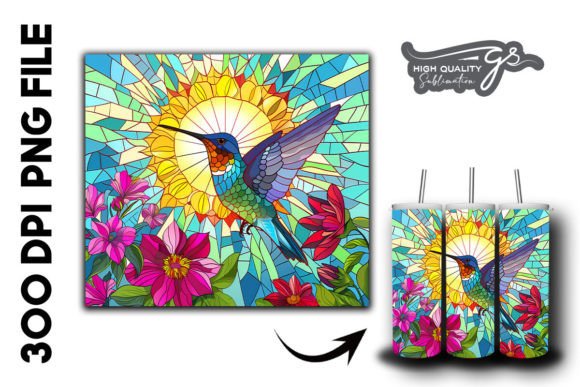
Stain Glass Hummingbird Tumbler Wrap 24 Graphics
A Brand Designer’s First Impression: Delicate, Joyful, and Unmistakably Local
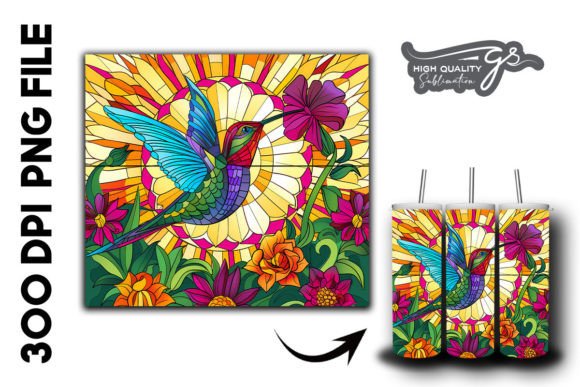
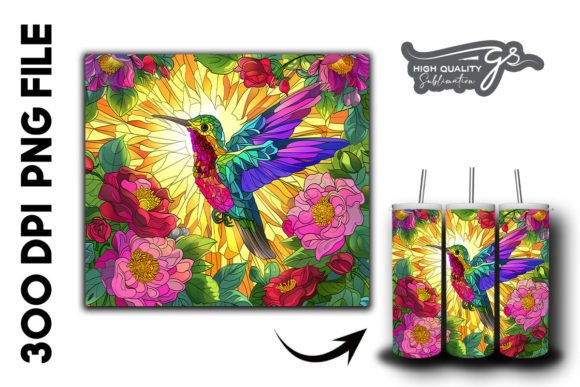
When I opened Stain Glass Hummingbird Tumbler Wrap 24, my first thought wasn’t “pretty clipart”—it was “this belongs on a lavender-scented soap label in a Portland boutique.” The design carries the luminous, hand-cut quality of real stained glass: crisp color transitions, subtle lead-line outlines, and a hummingbird rendered with quiet elegance—not cartoonish, not clinical, but alive with gentle motion. It reads as organic, artisanal, and quietly confident. For local businesses—think handmade candle studios, botanical skincare brands, or flower shops launching seasonal tumblers—it suggests warmth, craftsmanship, and mindful beauty. It’s neither overly feminine nor aggressively modern; instead, it lands in that sweet spot where premium feels approachable and decorative feels intentional.
Where This Graphic Design Asset Earns Its Keep in Real Small Business Branding
I recently used Stain Glass Hummingbird Tumbler Wrap 24 for a client—a family-run coffee roastery in Asheville launching limited-edition reusable tumblers for spring. We didn’t treat it as filler. We treated it as a core brand element. It became the hero graphic on tumbler wrap mockups, the focal point on hang tags printed on recycled kraft stock, and the repeating motif along the edge of thank-you cards tucked into online orders. Because the file delivers clean transparency (tested in PNG) and scalable clarity (verified in SVG), it held up flawlessly across formats: from 2-inch sticker die-cuts to 36-inch window decals at their downtown café.
Here’s how it actively supports small business branding beyond decoration:
- Stronger first impression: On shelf or screen, the stained-glass effect catches light and attention—making handmade goods stand out in crowded farmers’ markets or Instagram feeds.
- Better product recognition: Used consistently across tumblers, labels, and social media banners, it builds visual shorthand—customers begin associating that hummingbird motif with your brand’s values: care, detail, local roots.
- Clearer visual hierarchy: When layered behind bold sans-serif typography (like Montserrat Bold), the wrap’s intricate background recedes just enough to let key messaging—“Small-Batch Roasted,” “Hand-Poured,” “Made in Durham”—lead without competition.
- More consistent brand identity: Unlike generic floral vectors, this asset has distinct personality. Using it across packaging accents, printable inserts, and email headers creates cohesion without repetition fatigue.
- Improved customer trust: That handcrafted aesthetic signals authenticity—critical for food businesses, skincare makers, and boutique owners competing against mass-produced alternatives.
Smart Applications Across Your Local Business Touchpoints
Stain Glass Hummingbird Tumbler Wrap 24 shines brightest where intentionality meets visibility. It works exceptionally well as:
- A central motif on product labels for cold-pressed juices or herbal tonics
- An elegant border for menu graphics in neighborhood cafés or bakeries
- A decorative accent on hang tags for handmade soaps or ceramic mugs
- The primary visual in seasonal campaign graphics—think “Spring Botanical Collection” posters or Instagram carousels
- A refined background texture behind serif type on business cards for florists or wedding planners
- A standout element in Canva templates for local event flyers or pop-up shop announcements
Where to Use It Thoughtfully—Not Automatically
This isn’t a one-size-fits-all graphic design asset. As a brand designer, I advise caution when:
- Applying it to ingredient-heavy food labels—its detail can compete with regulatory text or nutritional panels.
- Using it on very small product labels (under 1.5 inches wide)—fine lines may blur or disappear in print.
- Layering it over low-contrast backgrounds (e.g., light yellow on cream)—always test grayscale output to ensure legibility.
- Integrating it into luxury minimalist branding—its ornamental nature contradicts restrained aesthetics like monochrome marble or unbleached linen visuals.
- Placing it near critical legal disclaimers or safety icons—decorative elements must never undermine compliance clarity.
Practical Brand Designer Notes Before You Launch
Before committing Stain Glass Hummingbird Tumbler Wrap 24 to client work or physical production, run these checks:
- Test it on real packaging mockups—not just digital previews—to assess scale, bleed, and alignment.
- Convert to grayscale: Does the hummingbird retain definition? If line weight vanishes, adjust stroke thickness pre-print.
- Preview on small labels: Zoom to actual size—do inner details hold up at 1 inch tall?
- Test alongside your brand fonts: Try it beside serif (Playfair Display), sans-serif (Inter), script (Dancing Script), and display (Bebas Neue) to gauge harmony.
- Verify commercial licensing: Confirm the file includes full commercial rights for physical product sales, not just digital use.
- Compare with competitor packaging: Does it elevate your offering—or blend in?
- Check SVG editability: Can you isolate the hummingbird, recolor sections, or simplify paths for specific applications?
- Review PNG transparency: Are edges crisp? No halos? No unintended white pixels?
Final Takeaway: A Thoughtful Tool for Intentional Branding
Stain Glass Hummingbird Tumbler Wrap 24 isn’t just another digital product from a creative marketplace—it’s a versatile, emotionally resonant graphic design asset built for real small business needs. When used with purpose—as part of a cohesive packaging design system, not as standalone clipart—it strengthens brand identity, deepens customer connection, and adds quiet sophistication to everyday items. For local business owners, handmade sellers, and creative entrepreneurs building something meaningful, this is more than decoration. It’s a visual signature waiting to be anchored in your story.